
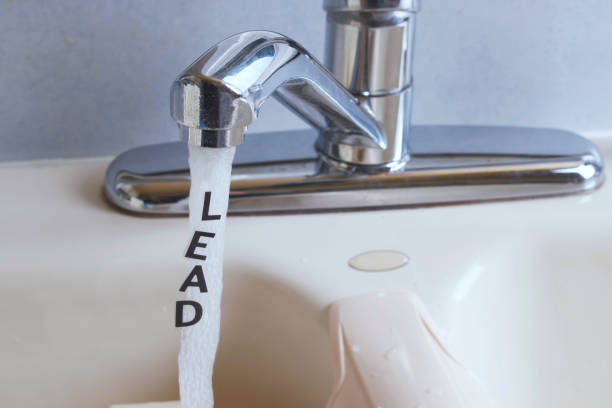
For many Brooklyn residents, owning a historic brownstone in Bed-Stuy, Park Slope, or Brooklyn Heights represents the ideal New York City lifestyle. However, private water quality investigations in early 2026 found unexpected lead levels in some renovated and well-maintained homes. Using a professional lead testing service in Brooklyn can similarly help residents identify hidden contamination caused by aging plumbing and fixtures.
While New York City’s municipal water supply is virtually lead-free when it leaves the upstate reservoirs, the journey through the “last mile” of distribution is where the contamination occurs. For Brooklyn brownstone owners, the shock of a positive lead test often stems from a misconception that if their interior plumbing has been modernized, their water is safe. As current investigations show, the source of lead is frequently buried beneath the sidewalk, far out of sight of the kitchen renovation.
The Invisible Threat: Lead Service Lines in Historic Brooklyn
The primary culprit in these recent Brooklyn cases is the lead service line—the pipe that connects the city’s large water main in the street to the building’s internal plumbing. In New York City, lead was the standard material for these service lines until it was banned in 1961. Because the vast majority of Brooklyn’s brownstone stock was built between the mid-19th century and the early 20th century, these properties are statistically the most likely to have original lead connections.
Even if a homeowner has spent thousands replacing internal pipes with copper or PEX, if the service line remains lead, the risk of leaching is significant. In many of the 2026 tests, lead levels were highest in the “first draw”—the water that has sat in the service line overnight. This stagnation allows the water to absorb lead from the pipe walls, creating a concentrated pulse of metal in the first glass of the morning. According to research into urban infrastructure, these “legacy” pipes remain the single largest source of lead exposure for residents of older urban centers.
The Myth of the “Renovated” Safe Haven
One of the most concerning findings from the recent Brooklyn tests was that recently renovated homes sometimes showed higher lead levels than those that had not been touched in decades. This paradox is often caused by the physical disturbance of the service line during sidewalk repairs or internal plumbing swaps.
When a contractor works on a building’s plumbing, the resulting vibrations can shake loose “scales” of lead and mineral buildup from the interior of the old service line. These particles then flow into the home’s new fixtures. Furthermore, if a new copper pipe is joined to an old lead service line, it can create a “galvanic cell”—a chemical reaction that accelerates the corrosion of the lead pipe. This highlights a critical lesson for Brooklyn residents: localized construction and “partial” plumbing updates can inadvertently spike lead levels, making a unit-specific test essential.
Understanding the Health Impacts of Chronic Exposure
The discovery of lead in a family home is a serious health concern. Public health agencies, including the CDC and the WHO, have repeatedly stated that there is no safe level of lead exposure, particularly for children and pregnant women. Lead is a potent neurotoxin that accumulates in the body over time, primarily storing itself in the bones and teeth.
For young children, the health impacts of even low-level lead ingestion can be irreversible, leading to:
- Neurological Deficits: Decreased IQ, shortened attention spans, and increased behavioral issues.
- Developmental Delays: Slowed physical growth and delayed onset of puberty.
- Hearing and Speech Problems: Difficulty with auditory processing and language acquisition.
In adults, chronic exposure is linked to increased blood pressure, kidney dysfunction, and reproductive issues. Because lead is colorless, tasteless, and odorless, residents of Brooklyn brownstones are often exposed for years before a sensory change or a formal test alerts them to the problem.
Navigating the 2026 Legislative Landscape: The Push for Replacement
The timing of these Brooklyn reports coincides with a massive legislative push in New York to “get the lead out.” In 2026, state and city officials are working under the mandate of the Lead Pipe Replacement Act, which aims to identify and replace every lead service line in the city by 2037.
The NYC Department of Environmental Protection (DEP) has released an interactive map to help residents identify if their property is served by a known lead line. However, as noted in several recent investigations, thousands of lines remain categorized as “material unknown.” For Brooklyn owners, this uncertainty is the primary driver for private testing. Waiting for the city’s 10-year replacement cycle is not a viable strategy for families with young children today.
Practical Solutions for Brownstone Residents
If a Brooklyn resident receives a positive lead test, the path forward involves both immediate mitigation and long-term remediation. While the ultimate solution is the full replacement of the lead service line—a project that can cost between $5,000 and $15,000 depending on the property—there are several effective ways to protect your family in the meantime.
- High-Quality Filtration: Not all filters are created equal. Homeowners should look for filters certified specifically for lead removal (NSF/ANSI Standard 53 or 58). Under-sink Reverse Osmosis systems or specialized carbon blocks are the most reliable for point-of-use protection.
- Aggressive Flushing: If you know you have a lead service line, running the cold water for 2 to 3 minutes every morning (or after any period of non-use longer than 6 hours) can significantly reduce the concentration of lead.
- Point-of-Entry Systems: For those who want to protect every tap in the house, centralized filtration systems can be installed where the water service enters the basement.
The Importance of Professional Testing and Data Transparency
The “unexpected” nature of the Brooklyn lead findings underscores the need for professional, laboratory-grade testing. Home-test strips found in hardware stores are often unreliable for detecting the low-level, chronic concentrations of lead that pose the greatest risk.
By conducting a “sequential” test—taking multiple samples from the same tap to see how levels change as the water flows—a homeowner can determine exactly where the lead is coming from. Is it a lead-solder joint under the sink? Is it the brass faucet itself? Or is it the service line in the street? Having this data allows for a targeted, cost-effective fix rather than a “shotgun” approach to plumbing repair.
Conclusion: Taking Ownership of Your Home’s Environmental Safety
The recent lead reports in Brooklyn serve as a wake-up call for the entire city. Our historic brownstones are beautiful links to the past, but they carry the environmental legacy of the era in which they were built. We cannot assume that municipal compliance at the reservoir translates to safety at the tap.
The most effective next step for any Brooklyn brownstone resident—especially those in homes built before 1961—is to verify their own water quality. If you have questions about the health impacts of lead or want to learn more about the current investigations into NYC infrastructure, the time to act is now. The best path forward is to contact a specialist today to schedule a comprehensive, multi-point water audit. Don’t wait for a city-wide mandate to reach your block; take control of your home’s safety and ensure your historic brownstone remains a healthy haven for generations to come.