
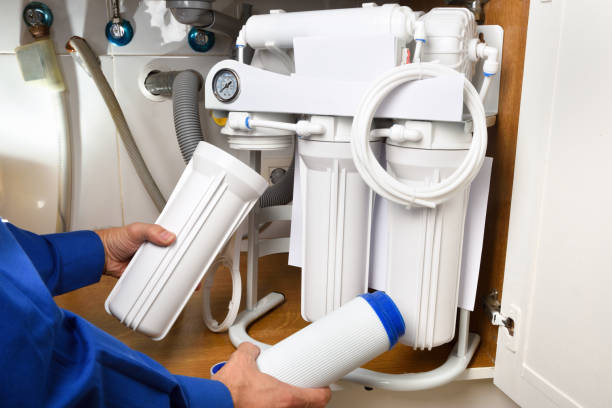
Across Queens, co-operative housing has long supported stable, community-focused living, from Jackson Heights garden apartments to high-rise complexes in Forest Hills and Rego Park. However, a concerning trend emerged in early 2026, with more co-ops failing comprehensive tap water audits despite residents using high-end filtration systems. Testing through a drinking water lead testing laboratory can help identify contamination that filtration alone may not resolve.
The assumption that a filter—whether it’s a pitcher, a faucet mount, or an under-sink unit—is a “set it and forget it” shield against urban contaminants is being dismantled. Recent investigations into these failures reveal that the unique infrastructure of Queens co-ops, combined with evolving environmental factors, is creating a scenario where standard consumer filters are simply outmatched. Understanding why these systems are failing is the first step toward true water security for borough residents.
The “Last Mile” Complexity: Queens’ Aging Infrastructure
The primary reason for these failures lies in the “last mile” of water delivery. While New York City’s water is treated to high standards at its source, the journey through the aging iron mains beneath Queens and into the internal plumbing of a 1950s-era co-op is where the trouble begins. Many Queens co-ops still utilize original galvanized steel or lead-soldered copper pipes.
As we move further into 2026, the physical degradation of these pipes is accelerating. When a building’s internal plumbing reaches a certain age, it begins to shed particulates at a rate that can overwhelm a standard filter. Residents often find that their filters, rated for six months of use, are clogging or “channeling” within weeks. Channeling occurs when high levels of sediment create a path of least resistance through the filter media, allowing contaminant types like lead or microplastics to pass through virtually untouched.
The Biofilm Bloom: Why Filters Can Become the Source
One of the most surprising findings in recent Queens research is that the filter itself can sometimes be the cause of a failed test. In many co-op buildings, water sits stagnant in the risers during the workday. When this stagnant water hits a point-of-use filter, it brings with it a concentrated load of organic matter.
If the filter is not changed frequently enough, or if the unit is located in a warm part of the kitchen (such as near a dishwasher), it can become a breeding ground for biofilm. Biofilm is a colony of bacteria and microorganisms that creates a protective “slime” layer. Standard carbon filters, which are designed to remove chlorine, inadvertently create a perfect environment for biofilm to grow because they remove the very disinfectant intended to keep the water sterile. In several Forest Hills co-ops, water that entered the filter “clean” left it with elevated heterotrophic plate counts (HPC), leading to a failed health audit.
The Rise of Emerging Contaminants: PFAS and Microplastics
Another factor contributing to the failure of traditional filtration in 2026 is the presence of emerging contaminants that many older systems were never designed to handle. Per- and polyfluoroalkyl substances (PFAS), often called “forever chemicals,” and microplastics are increasingly being detected in the urban water cycle.
While the city is making strides in large-scale treatment, as noted in recent investigations, these substances often bypass basic carbon pitchers. Queens residents who rely on simple filtration are often shocked to find these chemicals in their post-filtration tests. This is not necessarily a failure of the city’s water supply, but a failure of the consumer-grade filter to keep pace with modern environmental challenges. True protection in 2026 often requires specialized media or reverse osmosis (RO) technology.
Pressure Variations and “Slug” Events
Queens is currently seeing a surge in infrastructure work, particularly in neighborhoods like Long Island City and Astoria. This construction often involves shutting off and turning on large water mains. These events create “slugs” of high-velocity water that scour the interior of old iron pipes.
For a co-op resident, this means a sudden, massive influx of iron oxide and legacy sediment. A standard faucet-mounted filter can be overwhelmed by a single “slug” event, causing the filter’s fine pores to burst or bypass. If the resident isn’t aware that a pressure event has occurred, they may continue drinking water through a compromised filter for months. Our blog has tracked several instances where residents in Sunnyside reported “metallic” tastes immediately following local street work, even though their filter indicator lights remained green.
The Maintenance Gap: The Human Factor
Finally, the most common reason for filter failure in Queens co-ops is the maintenance gap. In a shared living environment, residents often assume that if the building has a centralized system, they are protected. However, many centralized “whole building” systems are designed only to handle sediment, not the dissolved metals or chemical contaminant types that leach from the building’s own internal branch lines.
Furthermore, individual owners often lose track of their filter life in the busyness of NYC life. A filter that is three months overdue for a change isn’t just ineffective; it can actually release concentrated amounts of the very contaminants it previously trapped—a phenomenon known as “desorption.” This is why independent, unit-specific research is the only way to confirm that your specific tap is delivering what the box promised.
Moving Toward Solutions: The 2026 Standard
For Queens co-op boards and shareholders, the path forward requires a shift from “reactive” to “proactive” water management. This includes:
- Multi-Stage Filtration: Moving away from single-stage pitchers to systems that combine sediment pre-filtration, activated carbon, and specialized ion-exchange or RO membranes.
- Routine Water Audits: Conducting annual or semi-annual tests specifically at the kitchen tap, rather than relying on building-wide reports from the basement.
- Smart Monitoring: Investing in systems that measure actual flow and water quality, rather than relying on simple timers that don’t account for the heavy sediment loads found in Queens.
Conclusion: Closing the Protection Gap
The failing water tests in Queens co-ops are a sobering reminder that we cannot outsource our health to a piece of plastic and carbon without proper data. In 2026, the “Champagne of tap water” requires a final polish at the point of use to account for the aging pipes and emerging chemicals of our modern world.
The most effective next step for any Queens co-op resident or board member is to stop assuming and start verifying. If you have a filter but are still noticing a strange taste, odor, or if you simply want the peace of mind that your system is actually working, the best path forward is to contact a specialist today. Whether you need help interpreting results or are looking for a solution tailored to your building’s specific plumbing history, taking control of your tap is the ultimate wellness upgrade.