
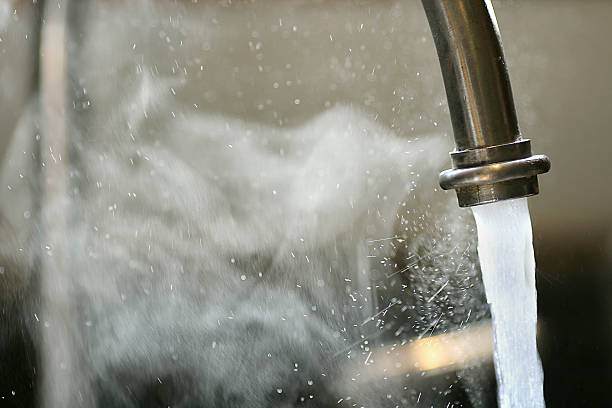
In the early months of 2026, a unsettling pattern has emerged within the historic and luxury residential corridors of Manhattan. From the pre-war cooperatives of the Upper West Side to the converted lofts of Tribeca, residents are discovering a hidden environmental hazard where they least expected it: their hot water taps. While municipal water safety messaging has historically focused on the “first draw” of cold water, recent independent investigations have revealed a significant spike in lead concentrations specifically within the hot water lines of several high-density buildings
This discovery challenges the belief that lead contamination is primarily a cold-water issue. Many residents use hot tap water for cooking, preparing drinks, and bathing children, making elevated lead levels a serious concern. Professional water testing in the Manhattan can help identify similar risks at individual fixtures and determine whether internal plumbing is contaminating water during the final stage of its journey to the tap.
The Chemistry of the Hot Water Tap: Why Heat Matters
The fundamental reason for the elevated lead levels in Manhattan’s hot water is rooted in basic chemistry. Lead is significantly more soluble in hot water than in cold. When water is heated, its molecular activity increases, making it far more “aggressive” as a solvent. If the water travels through pipes or fixtures containing lead—such as old lead-soldered copper joints or brass fittings—the heat facilitates a much faster rate of leaching.
In many of Manhattan’s older buildings, the hot water system is a closed-loop network that relies on large centralized boilers and storage tanks. This water is often kept at high temperatures for long periods, allowing it to sit in contact with the building’s internal plumbing for hours. As noted in recent research, the combination of high temperature and long stagnation times creates a “perfect storm” for lead accumulation. By the time a resident turns on the faucet in a 20th-floor penthouse, the water has had ample opportunity to absorb metallic contaminants from the building’s primary risers.
The Manhattan Infrastructure Paradox: Luxury vs. Legacy
Manhattan presents a unique infrastructure paradox. Many of the most expensive residences in the world are housed in buildings that are nearly a century old. While the interiors may feature state-of-the-art Italian cabinetry and marble, the “veins” of the building—the plumbing stacks—are often original. Even in buildings that have undergone partial renovations, “dead legs” (sections of old, unused pipe) and legacy lead-soldered joints are frequently left behind.
The current investigations suggest that the issue is not with the city’s water mains, which are managed by the NYC Department of Environmental Protection (DEP), but with the internal distribution systems of the buildings themselves. When the city’s water—which is treated to be non-corrosive—enters a building’s boiler system, the heating process can alter its pH and mineral balance, stripping away the protective coatings that normally prevent lead from leaching into the supply. This is a localized failure that requires a unit-by-unit understanding of water safety.
Health Impacts: The Hidden Risks of Hot Water Lead
The discovery of lead in hot water is particularly concerning because of the ways we use it. While most New Yorkers know not to drink from the hot water tap, it is a common practice to use it for “quick starts” in cooking. According to public health data, lead is a cumulative toxin that affects nearly every system in the body.
For children and pregnant women in Manhattan, the health impacts are the most severe. Lead exposure in early development is linked to:
- Neurological Damage: Permanent decreases in IQ and behavioral issues like ADHD.
- Developmental Delays: Slowed growth and hearing loss.
- Renal and Cardiovascular Issues: In adults, chronic low-level lead exposure can lead to kidney dysfunction and high blood pressure.
Because the symptoms of lead poisoning are often subtle—fatigue, irritability, or minor digestive issues—many residents remain unaware of the exposure until a formal blood test or water audit is performed. The “hot water” factor adds a layer of complexity, as the steam and mist from a hot shower can also aerosolize other contaminant types, though lead itself is primarily an ingestion hazard.
The Role of Building Management and Boards
As the reports of elevated lead levels spread, Manhattan co-op and condo boards are facing a moment of reckoning. The legal and ethical responsibility to provide safe water is pushing boards to move beyond the minimum requirements of the NYC Lead Emergency Transition Act. Many are now commissioning building-wide research to map out their plumbing vulnerabilities.
The challenge for management is that lead remediation in a Manhattan high-rise is neither simple nor cheap. It often involves:
- Phased Riser Replacement: A multi-million dollar undertaking that requires tearing into walls across dozens of lines.
- Point-of-Entry Conditioning: Installing systems in the basement to adjust the water’s chemistry specifically for the hot water loop to inhibit corrosion.
- Comprehensive Testing: Moving from “representative sampling” to testing every single unit to identify localized leaching points.
As we discuss on our blog, transparency is the only way to maintain shareholder trust. Buildings that proactively disclose lead issues and provide a roadmap for remediation are faring better in the 2026 real estate market than those that attempt to minimize the data.
Immediate Steps for Manhattan Residents
If you live in a Manhattan building and are concerned about lead in your hot water, you do not have to wait for a board-wide solution. There are immediate steps you can take to mitigate your risk:
- Never Cook with Hot Tap Water: Always use cold water and heat it on the stove or in a kettle. This simple change eliminates the primary route of ingestion for hot-water lead.
- Flush the Lines: If you must use the hot water for any reason, run it until it reaches its maximum temperature. This ensures you are not using the water that has been sitting stagnant in your apartment’s specific branch lines.
- Filter with Precision: Most pitcher filters are not rated for lead removal, and many faucet-mounted filters struggle with the flow rates of hot water. If you want to filter your hot water, you need a system specifically designed for high-temperature heavy metal removal.
- Clean Your Aerators: Lead particles (or “fines”) can get trapped in the small screens on the end of your faucets. Unscrew and clean these aerators once a month to prevent the buildup of lead-rich sediment.
The Importance of Independent Unit Testing
The Manhattan lead crisis has proven that “building-wide” reports are often misleading. A 2nd-floor unit may have perfectly safe water while a 15th-floor unit—served by a different riser with older solder—fails significantly. In 2026, the gold standard for peace of mind is an independent, third-party water audit.
A professional audit should include a “split sample” of both cold and hot water. This allows you to see the exact delta in lead concentration caused by your building’s heating system. As noted in our recent investigations, having this data is the only way to know if your specific taps are a source of exposure. It also provides you with the evidence needed to advocate for building-wide repairs.
Conclusion: Taking Control of the Last Mile
The reports of elevated lead in Manhattan’s hot water are a wake-up call for the “World City.” Our architectural heritage is a source of pride, but it carries an environmental legacy that requires modern vigilance. We cannot assume that because our lobby is attended and our neighborhood is prestigious, our water is infallible.
The most effective next step for any Manhattan resident or board member is to move from awareness to action. If you have noticed a metallic taste in your hot water, or if you simply want to ensure your home is a safe environment for your family, the time to test is now. The best path forward is to contact a specialist today. We can help you navigate the complexities of high-rise plumbing and find a solution that ensures every tap in your home—hot or cold—delivers nothing but purity.