
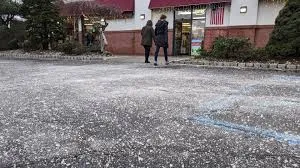
For many residents in the sleek, glass-walled high-rises of Jersey City’s waterfront or the mid-rise condos of Journal Square, water quality is often viewed through the lens of modern luxury. You expect your appliances to be top-tier and your tap water to be pristine. However, as we navigate the winter of 2026, a surprising and salty reality is settling in: “Winter Salt Week” isn’t just an environmental awareness campaign—it’s a direct explanation for why some condos are failing water tests for high chloride levels.
While we typically associate road salt with the white, crusty residue on our boots or the undercarriages of our cars, it has a much more invasive path. When the salts the streets before a Nor’easter, they aren’t just making the roads safer; they are introducing a persistent chemical into the local water cycle. For condo owners, finding out their water failed for chloride after a snowstorm is a wake-up call that urban infrastructure is more porous than it looks.
The Chemistry of the “Salty” Tap
To understand why your condo failed its test, we have to look at the chemistry of de-icing. Most road salt is sodium chloride. When snow melts, that salt doesn’t just disappear. It dissolves into the meltwater and runs into storm drains, eventually finding its way into the rivers and groundwater that feed our regional supply.
The sets a Secondary Drinking Water Standard for chloride at 250 mg/L. While this is primarily an aesthetic standard (meaning it affects the taste and odor), exceeding this level is a red flag. In Jersey City, where much of the water is sourced from the Boonton Reservoir, recent have shown that localized “chloride spikes” often mirror major road-salting events.
If your water failed for chloride, you likely noticed a faint, brackish taste. But the real danger of chloride isn’t the flavor—it’s the corrosivity.
Why Chloride is a “Plumbing Assassin”
Condo associations should be particularly concerned about chloride failures because of what it does to the building’s infrastructure. Chloride is a highly aggressive ion that accelerates the corrosion of metal pipes.
1. Galvanic Corrosion Acceleration In the multi-unit plumbing of a large condo building, you often have a mix of metals—copper risers, brass valves, and perhaps older galvanized steel joints. High chloride levels act like a “catalyst” for galvanic corrosion, which is the electrochemical reaction between dissimilar metals. This leads to pipe wall thinning and, eventually, the pinhole leaks that plague high-rise buildings.
2. Leaching of Heavy Metals As chloride eats away at the protective mineral scale inside your pipes, it exposes the raw metal. If your building or the city’s service lines contain lead or copper, the presence of high chloride makes it much easier for those to leach into your drinking water.
This is a frequent topic in our , where we explore how seasonal changes in water chemistry can lead to unexpected spikes in heavy metal concentrations at the tap.
The Jersey City “Hardscape” Effect
Why do Jersey City condos seem more susceptible than suburban homes? It comes down to “impervious surfaces.” Jersey City is a landscape of concrete and asphalt. When salt is applied to these surfaces, there is nowhere for the meltwater to be filtered through the soil. Instead, it rushes directly into the water system in high concentrations.
On the , we track how these “first flush” events after a snowmelt can cause chloride levels to triple in a matter of hours. For a condo building, this means the water entering your units in February might be significantly more corrosive than the water you were drinking in July.
Identifying the Health and Aesthetic Impacts
While the city generally maintains that these levels are safe for the general population, there are specific and lifestyle issues to consider:
- Sodium-Restricted Diets: For residents with hypertension or heart conditions, the sodium that accompanies chloride in road salt can be a concern if the levels remain elevated for long periods.
- Damaged Appliances: Chloride-heavy water is brutal on high-end appliances. It can cause pitting in the stainless steel interiors of dishwashers and lead to premature failure of water heaters.
- Skin and Hair Issues: Just like the ocean, high-salinity water can strip natural moisture from your skin and hair, leaving you with a “post-shower itch” that lotion can’t quite fix.
Solutions: Protecting Your Unit and Your Building
If your condo has failed a chloride test following a road salt event, you don’t have to wait for the spring thaw for relief. There are several available:
1. Point-of-Use Reverse Osmosis (RO) Standard carbon filters (like the ones in your fridge) cannot remove dissolved salts like chloride. Only a Reverse Osmosis system uses a semi-permeable membrane fine enough to strip away the salt ions, restoring the fresh, clean taste of your water.
2. Whole-Building Treatment For condo boards, the installation of a phosphate-based corrosion inhibitor at the building’s point of entry can help protect the pipes during high-chloride events. This doesn’t remove the salt, but it creates a “shield” that prevents the salt from eating the copper.
3. Strategic Testing As we mention in our , the best time to test your water isn’t when things are perfect—it’s during these “vulnerable” periods. If you had a failure in February, re-testing in May will help you determine if you have a chronic groundwater issue or a temporary seasonal spike.
Conclusion: The Hidden Cost of Winter Safety
We all appreciate the safety that road salt provides on our icy commutes, but we must also acknowledge the “hidden cost” that arrives at our taps. A chloride failure in a Jersey City condo is a reminder that our indoor and outdoor environments are inextricably linked.
By staying proactive with testing and implementing the right filtration barriers, you can enjoy the safety of salted roads without sacrificing the integrity of your plumbing or the quality of your drinking water.
If your condo has recently received a failed water report or if you’ve noticed a change in taste after the recent snow, please today. We can help you interpret your results and find a solution that fits your urban lifestyle.