
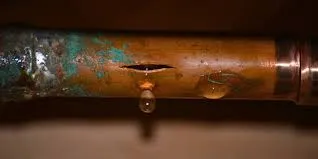
For property owners in historic Hoboken or Jersey City, replacing aging pipes can feel like the final step toward improving water safety. Corroded galvanized steel, older plumbing materials, and lead-soldered copper lines are often replaced with modern PEX or L-type copper systems to improve reliability and reduce potential risks. However, new plumbing does not automatically guarantee safe water quality. Manhattan home water testing specialists can provide post-installation laboratory analysis to help homeowners verify that newly installed plumbing systems are performing properly and that the water reaching household taps meets quality expectations.
As we navigate the water quality landscape of 2026, many North Jersey residents are discovering an important reality: new pipes do not automatically equal pure water.
A complete repiping project can eliminate problems associated with old infrastructure, but it can also introduce new variables into a building’s water system. Construction debris, changes in water chemistry, new materials, and installation conditions may influence water quality after the project is complete. Skipping professional testing after a major plumbing upgrade is a common mistake that can leave homeowners unaware of potential issues.
For larger facilities and complex properties, post-installation verification is equally important. Brooklyn hospital water testing specialists help healthcare facilities evaluate water systems after plumbing changes, ensuring that critical environments maintain reliable and safe water conditions.
Professional water testing after repiping provides clear laboratory data and confirms whether the upgraded system is delivering the expected results. By testing after installation, property owners can move beyond assumptions and gain confidence that their investment in new plumbing is also supporting safer water quality.
The “Construction Debris” Surge
The physical process of a repipe is violent for a plumbing system. Even if every inch of pipe inside your home is brand new, those pipes connect to a city service line and a municipal main that are likely decades old.
When the water is turned back on for the first time after a repipe, a massive pressure surge travels through the system. This “water hammer” effect can dislodge “pipe scale” (mineral buildup) from the city-side of the meter. This debris—laden with iron, manganese, and potentially lead—rushes into your brand-new pipes.
Without a test, you might not realize that your new system is immediately acting as a “trap” for street-level . Many homeowners find that their brand-new, expensive faucets are clogged with black or orange grit within days because they didn’t realize the “flush” didn’t clear the external sediment.
The “Off-Gassing” of Modern Materials
If your repipe involved PEX (cross-linked polyethylene), you have installed a durable, flexible, and corrosion-resistant material. However, brand-new PEX, along with the various glues, crimps, and solvents used in the installation, has a “breaking-in” period.
During the first few months, these materials can leach small amounts of Volatile Organic Compounds (VOCs) into the water. This often manifests as a “plastic” or “medicinal” taste and odor. While these levels often fall within standards, they represent a chemical shift that wasn’t there before. Without a post-installation test, you have no baseline to know if the “new pipe smell” is a harmless temporary phase or an indication of poor-quality materials that could have long-term .
The “Dead Leg” Bacterial Trap
In the chaos of a whole-house repipe, it is remarkably easy to create a “dead leg.” This happens when a plumber caps off an old line to a radiator, an outdoor spigot, or a former bathroom sink rather than removing it entirely back to the main riser.
Because water no longer flows through that capped segment, the chlorine disinfectant provided by local providers eventually dissipates. This stagnant pocket becomes a sanctuary for sulfur-reducing bacteria. Over time, these bacteria can migrate into your new “clean” lines.
We frequently see cases on our where homeowners have all-new plumbing but still suffer from a “rotten egg” smell. They assume the new pipes are “defective,” when in reality, they just skipped the bacterial testing that would have identified a stagnant pocket in the walls.
The “Service Line” Blind Spot
This is the most critical issue for Hoboken and Jersey City residents. You can replace every pipe inside your home, but if you didn’t replace the service line—the pipe that runs from the water main under the street to your house—you haven’t fully solved the lead problem.
Many people skip testing because they think, “I have all copper now; I’m safe.” However, if the service line is still lead or galvanized steel, the “aggressive” water chemistry can pull lead into your home regardless of your new interior plumbing. In our , we emphasize that the only way to confirm a service line’s impact is through a “First Draw” and “Flushed” water test. Skipping this leaves you with a false sense of security while you continue to consume lead-tainted water.
The Impact on Your New Investment
Skipping a test doesn’t just risk your health; it risks the very plumbing you just paid to install. If your new pipes were installed in an area with high corrosivity or unusual pH levels, those new copper pipes will begin to pit and fail much faster than they should.
A post-installation test checks the “balance” of your water. If the test shows that your new copper is already leaching (indicated by a metallic taste or blue-green staining), you can implement like a pH neutralizer or a whole-house filter before the damage becomes permanent.
Why Reverse Osmosis is the Final Step
Even with a perfect repipe, urban water in 2026 is subject to “forever chemicals” (PFAS) and microplastics that no pipe—new or old—can filter out.
Most savvy homeowners are now pairing their new plumbing with a Point-of-Use Reverse Osmosis (RO) system. As we discuss in our , RO provides a “final barrier.” It doesn’t matter if there was a construction surge, a dead leg, or a lead service line; the RO membrane strips those contaminants away at the kitchen tap, ensuring your “new pipe” investment actually results in the purest water possible.
Conclusion: Don’t Guess, Verify
Replacing your pipes is a massive accomplishment and a significant step toward a healthier home. But without a post-installation water test, you are playing a game of “plumbing roulette.” You are assuming that the installation was perfect, the materials are inert, and the city’s service line is clean.
In a city like Hoboken or Jersey City, where infrastructure is a patchwork of the old and the new, verification is the only path to peace of mind. A water test is the “final inspection” that tells you if your investment was successful.
If you’ve recently replaced your pipes but haven’t yet verified the results, or if you’re noticing a strange taste in your “new” water, please today. We can help you arrange a comprehensive testing panel that looks for the specific markers of construction-related contamination.