
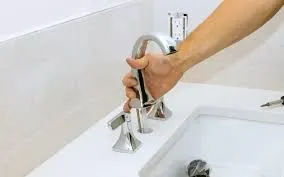
In the world of North Jersey real estate, a “fully renovated” tag is usually a gold-standard guarantee. For buyers in Jersey City’s brownstones or Fort Lee’s mid-century conversions, new plumbing is the ultimate peace of mind. However, as we move through 2026, a counterintuitive trend is emerging in laboratory data: hot water taps in recently renovated properties are failing quality tests at a significantly higher rate than cold water taps.
While cold water often passes municipal and internal audits, the hot water lines—specifically those in properties with “designer” upgrades—are showing elevated levels of heavy metals and microbial regrowth. This “Hot Tap Disparity” is forcing a rethink of how we manage water safety after the walls are closed.
The Physics of the Failure: Heat as a Solvent
The primary driver behind this lab trend is simple thermodynamics. Heat acts as a catalyst for chemical reactions. When water is heated—typically between $120\text{°F}$ and $140\text{°F}$ in a residential system—it becomes significantly more “aggressive” than cold water.
1. Accelerated Metal Leaching
Modern “lead-free” brass fixtures can still contain trace amounts of lead (up to $0.25\%$) and significant amounts of copper and zinc. While cold water might glide over these metallic surfaces without much interaction, hot water actively leaches these metals into the stream.
Recent into renovated Hoboken apartments show that hot water samples often contain three to five times the copper concentration of cold water samples taken from the same faucet. This is why the has long advised against using hot tap water for cooking or baby formula—advice that is proving even more critical in 2026 as lab sensitivity increases.
2. The Solder Reaction
Even in properties with brand-new copper pipes, the points of connection—the solder joints—remain a vulnerability. If a renovation was completed with high-heat soldering techniques, the hot water circulating through those lines can slowly “scour” the joints, releasing metal ions into the water. This is a recurring theme in our current on premise plumbing failures.
The Disinfection Gap: Why Hot Water “Spoils”
Beyond the metallic issues, hot water taps are failing for biological reasons. Most New Jersey water utilities provide a chlorine residual to keep water sterile. However, chlorine is highly volatile.
- Thermal Decay: When water is stored in a hot water tank or moved through a recirculating loop, the heat causes the chlorine to “off-gas” or decay rapidly.
- Zero Residual: Lab data frequently shows that while cold water arrives at the tap with a healthy $0.5\text{ mg/L}$ chlorine residual, the hot water at the same tap often registers at zero.
Without this “disinfection shield,” the hot water lines become a breeding ground for biofilms. This is why many residents in renovated Fort Lee high-rises report a “musty” or “earthy” smell from their hot water but not their cold. We’ve documented the rise of these “chlorine-dead zones” on our , where we track building-wide water age issues.
The “Stagnant Riser” Effect in Luxury Renovations
In many renovated properties, especially those where bathrooms were relocated or added, the plumbing architecture becomes more complex. This creates dead legs—sections of pipe where water sits for days or weeks without movement.
Hot water in these stagnant branch lines cools down to the “danger zone” (between $77\text{°F}$ and $113\text{°F}$), the perfect temperature for Legionella and other opportunistic pathogens to flourish. When the tap is finally turned on, the first few liters of water are a concentrated cocktail of whatever has been growing in that stagnant line. These specific are rarely caught by the city’s water reports, which only test the main lines, not the internal “endpoints” of your home.
Why Your Refrigerator Filter Isn’t the Answer
Many homeowners assume that their high-end refrigerator filter handles all the water safety. However, most refrigerator lines are connected only to the cold water supply. If you are using hot water for “quick start” boiling or filling a pot for pasta, you are bypassing your home’s only line of defense.
To address the hot water failure rate, a more holistic approach is required. We address these discrepancies in our , where we explain why a “pass” on a cold-water test doesn’t guarantee your home’s overall safety.
Strategies for the Modern Homeowner
If you live in a recently renovated property or are planning a project, here is how to beat the “Hot Tap Trend”:
- Request a “Split” Lab Test: When testing your water, always request separate panels for hot and cold water. This is the only way to identify if your water heater or internal branch lines are compromising your quality.
- The 30-Second Flush: Even in a new renovation, run your hot water for 30 seconds before using it for anything other than washing. This flushes out the high-metal, low-chlorine water that has been sitting in your fixtures.
- Check Your Water Heater Temperature: Ensure your heater is set to at least $140\text{°F}$ to inhibit bacterial growth, but ensure you have “anti-scald” mixing valves installed at the tap to prevent injury.
- Point-of-Use Filtration: For the highest level of safety, install that handle water at the point of consumption, such as a reverse osmosis system for drinking and cooking water.
Conclusion: Trust the Lab, Not the Label
A “new” plumbing system is a mechanical asset, but it is not a guarantee of chemical purity. The current lab trends across North Jersey are a wake-up call for homeowners and property managers alike: the hot water system is the “weakest link” in home water quality.
By recognizing that hot water acts differently than cold, we can take smarter steps to protect our families. Whether it’s through targeted flushing or advanced point-of-use filtration, the goal is to ensure that every tap in your home—regardless of temperature—meets the highest standards of safety.
If you are seeing different results between your hot and cold water or want to schedule a comprehensive “Split-Tap” analysis, please today. We can help you interpret your lab results and connect you with the right for local remediation experts.