
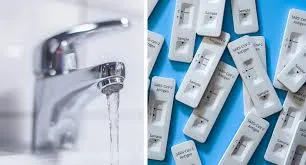
In the fast-paced North Jersey real estate market of 2026, a new variable has entered the “due diligence” phase of home buying. It’s no longer just about the roof’s age or the state of the HVAC system. Today, a growing number of buyers are arriving at open houses armed with information from viral social media threads and “crowd-sourced” water maps.
The phenomenon is clear: Lab reports are going viral, and they are changing how homes are sold. Whether it’s a TikTok creator showing a “lead-spike” result from a freshly renovated Hoboken apartment or a community Facebook group in Ridgewood sharing a heatmap of copper exceedances, the “hidden” chemistry of tap water is now public knowledge. For buyers, the request for a comprehensive tap test is becoming as standard as a termite inspection.
The Social Media “Whistleblowers”: Why Water is Trending
The shift began in late 2025 when several high-profile “water influencers” began posting side-by-side comparisons of municipal water reports versus actual home tap results. These videos—often garnering millions of views—exposed a reality that many in the industry already knew: municipal compliance does not equal residential safety.
As we’ve noted in our , the water leaving a treatment plant in 2026 is generally high quality, but the journey through miles of aging city mains and the “final inch” of a home’s internal plumbing can change that chemistry entirely. When these viral reports show high levels of lead or like PFAS in neighborhoods that were previously considered “safe,” buyers take notice.
The Impact on the 2026 Jersey Real Estate Market
In the current market, transparency is a buyer’s greatest leverage. Real estate professionals in Bergen and Hudson counties are reporting a significant uptick in “Water Contingency” clauses.
- The New Standard of Care: Buyers are no longer satisfied with the “Standard Disclosure” form. They are requesting “First Draw” and “Flush” samples to see exactly what is coming out of the kitchen tap after a night of stagnation.
- The “Viral Neighborhood” Effect: If a single house on a block posts a failed lab report on a community forum, every subsequent listing in that 3-block radius is now being scrutinized for the same issues.
- Renovation Skepticism: Ironically, the trend we’ve seen in our —where new plumbing upgrades lead to unexpected spikes in lead or copper—has also gone viral. Buyers are now testing “flipped” homes specifically to ensure the renovation didn’t disrupt legacy sediment layers.
New Legislation Meets Viral Awareness
This wave of buyer-led testing is being bolstered by New Jersey’s A2929/S1034 law, which went into full effect in early 2026. This legislation mandates that landlords and sellers disclose the “known or potential” presence of lead service lines.
However, the “viral” nature of modern data means that even if a seller isn’t legally required to test, a savvy buyer will do it anyway. The 2021 Lead Service Line Replacement Law aimed for a 2031 completion date, but in 2026, we are in the “messy middle” of that transition. Thousands of homes still have “unknown” service line materials, and the viral lab reports are the tool buyers are using to fill that information gap. For more on these regulatory shifts, check out our .
How Sellers Are Responding to the “Tap Test” Trend
Smart sellers in 2026 are getting ahead of the viral curve. Rather than waiting for a buyer’s inspector to find a problem that could sink a deal, they are performing their own “Pre-Listing Water Audit.”
- Verified Clearance: Providing a recent, certified lab report in the listing packet acts as a “seal of approval” that can actually drive up a home’s value.
- Targeted Remediation: If a pre-listing test shows a spike, sellers can install Point-of-Use like a high-capacity Reverse Osmosis system. On our , we’ve seen that a $500 filtration fix can save a $50,000 price concession at the closing table.
- Addressing the Aesthetic: Viral videos often focus on “brown water” or “blue-green staining.” Addressing these issues through a professional flush before a home goes on the market prevents the “viral” bad optics from occurring during a showing.
The Power of “Crowd-Sourced” Water Data
The most fascinating trend of 2026 is the rise of independent water quality databases. Platforms that allow residents to upload their own lab results are creating a real-time, block-by-block map of water safety.
This is “participatory science” at its most impactful. While official reports are often a year behind, these “viral” maps are updated daily. A buyer looking at a home in Jersey City can now see if the house two doors down recently tested high for chloride or had a drop in chlorine residuals. This level of granularity is unprecedented and is forcing both sellers and municipal authorities to be more responsive.
Conclusion: Trust, but Verify
The 2026 real estate market has reached a point where water quality is no longer a hidden utility—it’s a frontline amenity. The viral lab reports that once caused panic are now being used as a tool for empowerment. Buyers are safer, sellers are more accountable, and the transparency of our infrastructure is at an all-time high.
If you are a buyer looking to protect your investment, or a seller wanting to ensure your renovation results in a clean bill of health, the message is simple: Don’t wait for the report to go viral; get the facts today.
If you are in the middle of a transaction and need to interpret a water report or want to schedule a “Real Estate Clearance” test, please today. You can also reach our team through our page for guidance on the latest North Jersey water quality benchmarks.