
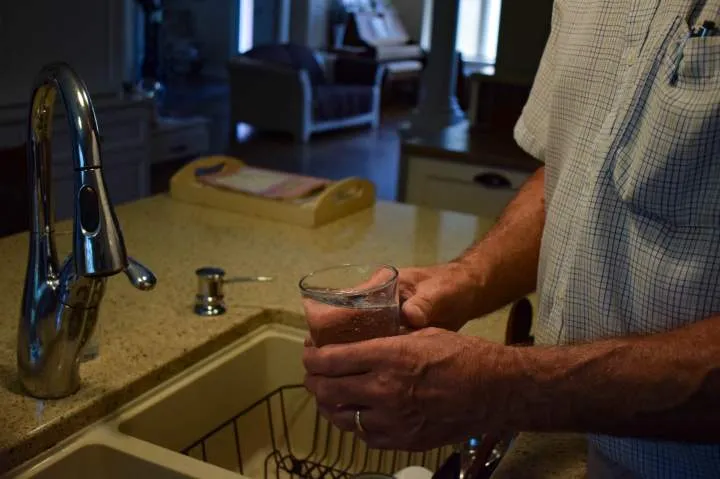
In the tightly packed residential blocks of Hoboken, where historic charm often meets modern luxury, a new standard for tenant safety is being set. Following the discovery of elevated lead levels in a mid-rise apartment complex near Columbus Park, a prominent local landlord has taken the unprecedented step of initiating annual tap water testing for all units.
As we move through March 2026, this move comes at a pivotal time for New Jersey’s real estate market. With the recent passage of Bill A2929/S1034 in late 2025, the state has significantly strengthened lead disclosure and testing requirements for residential rental properties. For Hoboken residents, the “Lead in Drinking Water Disclosure” is no longer just a piece of paper—it is a vital health record.
The Catalyst: A Surprise Discovery in a “Lead-Free” Building
The decision to move to annual testing was triggered by a routine maintenance check that revealed lead concentrations exceeding the EPA’s “Action Level” of $15 \text{ ppb}$ (parts per billion). What made the discovery particularly alarming was that the building had undergone a partial plumbing renovation in 2018.
While the main service lines were thought to be copper, the testing identified lead leaching from interior brass fixtures and lead-based solder at joints that were not reached during the renovation. This scenario is a frequent focus of our , proving that even when the city’s water mains are lead-free, the “final inch” of the plumbing can be a source of contamination.
Understanding the New Legislative Landscape
The Hoboken landlord’s proactive stance aligns with a broader shift in New Jersey law. Under the 2025 legislation, several new protections for tenants have been codified:
- Mandatory Disclosure: Landlords must now provide a formal “Lead in Drinking Water Disclosure” statement to all prospective and current tenants.
- Tenant-Requested Testing: Public water systems are now required to conduct a lead water test at no charge upon the request of any residential occupant.
- Lease Termination Rights: In a bold move for tenant rights, the law now allows a tenant to terminate their lease without penalty if a landlord denies access to a lead service line for replacement.
As noted in recent , these measures are designed to bridge the information gap that has historically left renters—who often don’t see the water bill—in the dark about their home’s infrastructure.
Why Annual Testing is the New Gold Standard
While state law requires disclosure of known lead, the Hoboken case highlights the importance of active monitoring. Lead leaching is not a static event; it is a chemical process influenced by water temperature, stagnation, and pH levels.
By testing annually, the landlord can track the efficacy of corrosion control measures and identify “hot spots” before they become a building-wide health hazard. This proactive approach is a recurring recommendation on our , where we advocate for data-driven water safety.
The Impact on the Hoboken Rental Market
Hoboken is a city of renters, and the discovery of lead has shifted the conversation from “amenities” to “essentials.” Prospective tenants in 2026 are increasingly asking for the latest water lab results alongside the standard move-in walkthrough.
For property owners, the cost of an annual test is a small price to pay compared to the liability and vacancy risks associated with lead exposure. This “transparency-first” model is helping to rebuild trust between residents and property managers in a city where aging pipes are a constant reality. For more common questions about these requirements, visit our .
Identifying Potential Lead in Your Apartment
If you live in a Hoboken brownstone or older apartment, you can look for these physical clues of potential lead exposure:
- Grey, Dull Pipes: Lead pipes are typically dull grey and very soft. If you can scratch the metal with a key and it turns shiny silver, it’s likely lead.
- Bulbous “Wiped” Joints: In older plumbing, lead joints often look like a thick, rounded “bulb” where two pipes meet.
- Low Flow/Sediment: Lead particles can flake off into faucet aerators. If you find heavy sediment in your screens, it’s time for a with a testing professional.
Conclusion: A Blueprint for Hudson County
The move toward annual testing in Hoboken serves as a blueprint for the rest of Hudson County. As Jersey City and Union City continue their aggressive lead service line replacement programs (aiming for a 100% lead-free New Jersey by 2031), the “internal” plumbing of our homes remains the last frontier.
A landlord who chooses to test isn’t just following the law—they are protecting the future of their tenants. In 2026, the clear glass of water on your kitchen table is the ultimate indicator of a well-managed home.
If you are a tenant concerned about lead or a landlord looking to implement a testing protocol, please today. We can provide guidance on the latest New Jersey regulations and help you understand your rights and responsibilities in the fight against lead.