
You Replaced the Pipes but Skipped Testing — Here’s What Happened
For a homeowner in the historic districts of Hoboken or a multi-family property owner in Jersey City, “replacing the pipes” feels like the ultimate victory over aging infrastructure. You’ve spent the capital to rip out the ancient, corroding galvanized steel or the suspect lead-soldered copper. You’ve seen the shiny new PEX or L-type copper lines snaking through your joists. The project is signed off, the walls are closed, and you finally feel “safe.”
But as we navigate the water quality landscape of 2026, many North Jersey residents are discovering a hard truth: New pipes do not automatically equal pure water.
In fact, skipping a professional water test after a total repiping is one of the most common mistakes homeowners make. We often assume that the “source” of our problems was the old pipe itself. While that is often true, the act of replacing them introduces a whole new set of variables into your home’s ecosystem. Here is the reality of what happens when you swap the plumbing but skip the laboratory verification.
The “Construction Debris” Surge
The physical process of a repipe is violent for a plumbing system. Even if every inch of pipe inside your home is brand new, those pipes connect to a city service line and a municipal main that are likely decades old.
When the water is turned back on for the first time after a repipe, a massive pressure surge travels through the system. This “water hammer” effect can dislodge “pipe scale” (mineral buildup) from the city-side of the meter. This debris—laden with iron, manganese, and potentially lead—rushes into your brand-new pipes.
Without a test, you might not realize that your new system is immediately acting as a “trap” for street-level . Many homeowners find that their brand-new, expensive faucets are clogged with black or orange grit within days because they didn’t realize the “flush” didn’t clear the external sediment.
The “Off-Gassing” of Modern Materials
If your repipe involved PEX (cross-linked polyethylene), you have installed a durable, flexible, and corrosion-resistant material. However, brand-new PEX, along with the various glues, crimps, and solvents used in the installation, has a “breaking-in” period.
During the first few months, these materials can leach small amounts of Volatile Organic Compounds (VOCs) into the water. This often manifests as a “plastic” or “medicinal” taste and odor. While these levels often fall within standards, they represent a chemical shift that wasn’t there before. Without a post-installation test, you have no baseline to know if the “new pipe smell” is a harmless temporary phase or an indication of poor-quality materials that could have long-term .
The “Dead Leg” Bacterial Trap
In the chaos of a whole-house repipe, it is remarkably easy to create a “dead leg.” This happens when a plumber caps off an old line to a radiator, an outdoor spigot, or a former bathroom sink rather than removing it entirely back to the main riser.
Because water no longer flows through that capped segment, the chlorine disinfectant provided by local providers eventually dissipates. This stagnant pocket becomes a sanctuary for sulfur-reducing bacteria. Over time, these bacteria can migrate into your new “clean” lines.
We frequently see cases on our where homeowners have all-new plumbing but still suffer from a “rotten egg” smell. They assume the new pipes are “defective,” when in reality, they just skipped the bacterial testing that would have identified a stagnant pocket in the walls.
The “Service Line” Blind Spot
This is the most critical issue for Hoboken and Jersey City residents. You can replace every pipe inside your home, but if you didn’t replace the service line—the pipe that runs from the water main under the street to your house—you haven’t fully solved the lead problem.
Many people skip testing because they think, “I have all copper now; I’m safe.” However, if the service line is still lead or galvanized steel, the “aggressive” water chemistry can pull lead into your home regardless of your new interior plumbing. In our , we emphasize that the only way to confirm a service line’s impact is through a “First Draw” and “Flushed” water test. Skipping this leaves you with a false sense of security while you continue to consume lead-tainted water.
The Impact on Your New Investment
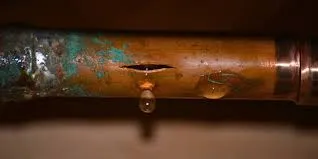
Skipping a test doesn’t just risk your health; it risks the very plumbing you just paid to install. If your new pipes were installed in an area with high corrosivity or unusual pH levels, those new copper pipes will begin to pit and fail much faster than they should.
A post-installation test checks the “balance” of your water. If the test shows that your new copper is already leaching (indicated by a metallic taste or blue-green staining), you can implement like a pH neutralizer or a whole-house filter before the damage becomes permanent.
Why Reverse Osmosis is the Final Step
Even with a perfect repipe, urban water in 2026 is subject to “forever chemicals” (PFAS) and microplastics that no pipe—new or old—can filter out.
Most savvy homeowners are now pairing their new plumbing with a Point-of-Use Reverse Osmosis (RO) system. As we discuss in our , RO provides a “final barrier.” It doesn’t matter if there was a construction surge, a dead leg, or a lead service line; the RO membrane strips those contaminants away at the kitchen tap, ensuring your “new pipe” investment actually results in the purest water possible.
Conclusion: Don’t Guess, Verify
Replacing your pipes is a massive accomplishment and a significant step toward a healthier home. But without a post-installation water test, you are playing a game of “plumbing roulette.” You are assuming that the installation was perfect, the materials are inert, and the city’s service line is clean.
In a city like Hoboken or Jersey City, where infrastructure is a patchwork of the old and the new, verification is the only path to peace of mind. A water test is the “final inspection” that tells you if your investment was successful.
If you’ve recently replaced your pipes but haven’t yet verified the results, or if you’re noticing a strange taste in your “new” water, please today. We can help you arrange a comprehensive testing panel that looks for the specific markers of construction-related contamination.