
Residents of Flushing, Jackson Heights, and Jamaica are reporting growing concerns about metallic tastes, brown discoloration, and other tap water issues. In 2026, rising 311 complaints and community reports suggest that aging infrastructure between the street and individual homes may be contributing to these problems. Professional tap water testing in Queens can identify hidden contaminants and help residents determine the source.
While the city’s water is treated to incredibly high standards at the source, the journey through the aging service lines of Queens is where the quality often degrades. These privately owned pipes—many of which have been buried for over 70 years—are reaching their breaking point. Understanding why these older lines are failing and what it means for your home is the first step toward reclaiming your water quality.
The Queens Infrastructure Dilemma: Why Older Neighborhoods are Struggling
Queens is a borough of beautiful contrast, featuring both soaring new developments and historic residential blocks. However, in neighborhoods where the housing stock dates back to the early and mid-20th century, the water service lines are often made of lead or galvanized steel. These materials were the industry standard for decades, but in 2026, they represent a significant liability.
The primary issue is that these service lines are the responsibility of the property owner, not the city. When the city replaces a massive water main in the middle of Northern Boulevard, they are only touching the public side of the system. The “last mile” of pipe—the one that runs under your sidewalk and through your foundation—remains untouched unless you take action. In our recent research, we’ve seen that these older lines are prone to internal corrosion and “scouring” as they age.
Mechanical Failure: The Science of Discolored Water
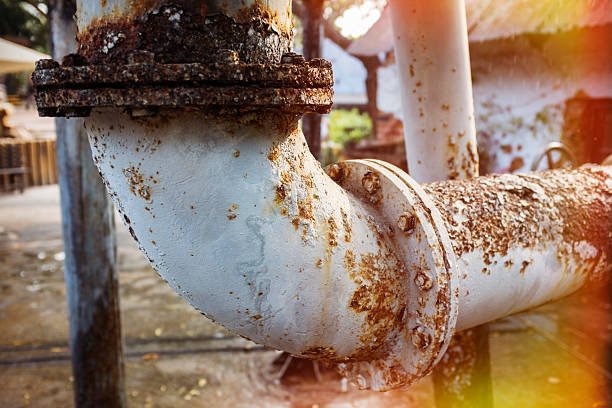
When a Queens resident complains about “brown water,” they are usually seeing the results of iron oxide and sediment being dislodged from the interior of their service line. Over time, galvanized steel pipes develop a brittle, rusty interior scale. In 2026, we are seeing more frequent “pressure pulses” in the borough due to localized construction and water main work.
These pressure changes act like a physical shock to the pipes. The vibrations shake loose the scale, which then flows directly into your faucets. This is why you might see a sudden burst of discoloration after a nearby hydrant is opened or a street repair is conducted. In our investigations, we have found that even a few feet of old galvanized pipe can be enough to contaminate the water for an entire household.
The Lead Factor: A Lingering 2026 Concern
Perhaps the most serious reason for the rise in complaints is the presence of lead. While lead doesn’t usually change the color or taste of the water, it is the most hazardous of all contaminant types. In neighborhoods like Flushing, the DEP has recently expanded its free replacement program because so many properties still rely on lead connections.
Lead enters the water through a process called leaching. This happens when the water sits stagnant in the service line overnight. The chemical reaction between the water and the lead pipe allows the metal to dissolve into the liquid. By the time you pour your first cup of coffee in the morning, you could be consuming a concentrated “pulse” of lead. As we discuss on our blog, this risk is amplified in homes with older brass fixtures or lead-soldered copper pipes, which can create a “galvanic” reaction that accelerates corrosion.
Health Impacts of Aging Pipes
The health impacts of older service lines extend beyond just lead. Corroded pipes provide a sanctuary for biofilm—a thin layer of bacteria and organic matter that clings to the rough interior of the pipe. When the city’s chlorine residual is low or when the water sits for too long, these bacteria can multiply.
For vulnerable populations in Queens—including the elderly and families with young children—this can lead to:
- Gastrointestinal Issues: Stomach discomfort or nausea caused by bacterial growth in stagnant lines.
- Skin Irritation: Dryness or rashes from high levels of iron and manganese.
- Neurological Risks: Developmental delays and learning difficulties in children exposed to chronic lead pulses.
In our investigations, we have seen that many residents attribute these symptoms to “seasonal allergies” or “stomach bugs,” when the actual cause is the chemical and biological makeup of their tap water.
Navigating the Replacement Programs in 2026
The good news for Queens residents is that the city is finally acknowledging the scale of the problem. In 2026, the DEP has received record levels of funding to help replace lead service lines in “environmental justice” communities. Currently, programs are expanding into Flushing and other high-density areas.
However, these programs are often oversubscribed and limited to specific blocks. Many homeowners find themselves in a “waiting game” while their water quality continues to decline. For those who aren’t eligible for the free city program, the cost of a private replacement can range from $6,000 to $10,000. This is why many families are turning to high-capacity research into point-of-entry filtration as a bridge to safety.
Practical Steps for Queens Homeowners
If you live in a Queens neighborhood with older service lines, you don’t have to wait for a full pipe replacement to improve your water quality. You can take immediate action to mitigate the risks:
- The “Cold Flush”: Always run your cold water for at least 30 seconds before drinking or cooking, especially in the morning. This flushes out the water that has been sitting in your service line.
- Clean Your Aerators: The small screens on the ends of your faucets can trap lead “fines” and rust particles. Remove and clean them monthly.
- Independent Testing: Don’t rely on general building reports. Get a unit-specific test that looks for lead, iron, and bacterial levels at your specific tap.
By taking these steps, you are addressing the “last mile” of your water safety. As noted in our investigations, knowledge is the most powerful tool you have. When you know exactly what is coming out of your tap, you can choose the right filtration solution for your family.
Conclusion: Reclaiming Queens’ Water
The rise in water complaints across Queens is a clear sign that our infrastructure needs our attention. Our older service lines have served us well for decades, but in 2026, they are showing their age. Whether you are dealing with the aesthetic nuisance of brown water or the invisible threat of lead, the solution starts with understanding the material of your service line.
The most effective next step for any Queens resident who has noticed a change in their water quality is to move from complaints to data. If you are concerned about the age of your pipes or the safety of your tap, the best path forward is to contact a specialist today. We can help you navigate the city’s replacement maps and find a solution that ensures your family is drinking the “Champagne of tap water” once again.
NYC DEP Water Service Line Replacement Program
This video provides a deep dive into the 2026 infrastructure trends, specifically discussing how major funding is being utilized for pipe rehabilitation and lead line replacement in the five boroughs.