
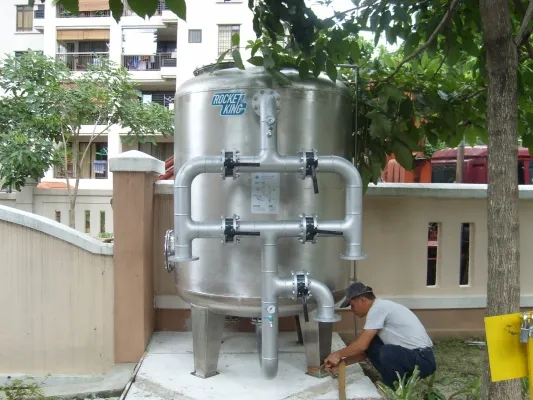
For many residents in the luxury condominiums and converted industrial lofts of Hoboken, the promise of “whole-building filtration” is a major selling point. It offers a sense of security—a centralized shield that supposedly scrubs the municipal water of impurities before it ever enters the building’s vertical risers. You move in, see the industrial-sized carbon tanks in the basement utility room, and assume the water at your kitchen tap is as pure as it can be.
However, as we move through 2026, a troubling pattern is emerging in Mile Square City. Recent water quality audits are showing that even when a building’s central filtration system is functioning perfectly at the point of entry, the water is frequently failing safety tests at the “endpoints”—the faucets, showers, and ice makers inside individual units.
This disconnect between the basement and the bathroom is a classic case of what water scientists call “secondary contamination.” It serves as a stark reminder that in an urban environment like Hoboken, the journey through the building’s own internal plumbing is often more hazardous than the journey through the city’s water mains.
The “Shield” That Ends Too Early
Whole-building filtration is designed to tackle “source” issues. These systems are excellent at removing the chlorine smell from the city supply, filtering out street-level sediment, and reducing the presence of certain picked up in the municipal distribution network.
The failure occurs because centralized filtration is a “point-of-entry” (POE) solution. Once the water passes through those basement filters, it is essentially on its own. It must then travel through hundreds, if not thousands, of feet of internal piping, storage tanks, and booster pumps to reach the top floors of a mid-rise on Washington Street or a waterfront high-rise. It is during this “final mile” of transit that the water quality often degrades.
Why Central Filtration Fails the Individual Unit
Recent into Hoboken’s high-density housing have identified three primary reasons why clean water at the meter becomes contaminated at the tap.
1. The Paradox of De-chlorination
Most whole-building systems rely on massive activated carbon beds to remove chlorine. While this makes the water taste better and is gentler on the skin, it removes the “disinfection shield.” Chlorine’s job is to prevent the growth of bacteria as water sits in the pipes. In a large building where water might sit stagnant in a riser for hours while residents are at work, the absence of chlorine allows for the rapid growth of biofilms. This “regrowth” can lead to musty odors and failed tests for coliform or Legionella at the unit level.
2. Internal Pipe Corrosion (The Hidden Leaching)
Hoboken is a mix of old and new. Even in “renovated” buildings, it is common to find modern copper lines connected to older galvanized iron risers. Without the protective mineral scale that usually builds up over time, and especially if the water is slightly acidic, the water begins to leach metals from the building’s own infrastructure.
A basement filter cannot stop lead or copper from entering the water after the filter. If your unit is at the end of a long branch line with old solder joints, your water may fail for lead even if the water leaving the basement filter is lead-free. This is a recurring theme in our current regarding North Jersey’s vertical infrastructure.
3. Low-Flow Stagnation
Modern Hoboken condos utilize low-flow fixtures to meet green building standards. While environmentally conscious, these fixtures reduce the “velocity” of water through the pipes. Water stays in contact with the plumbing materials for much longer periods. If the building’s central system has stripped the water of its protective minerals and disinfectants, the water becomes “aggressive,” pulling tastes and metals from the very fixtures you just installed.
The Warning Signs at the Tap
If you live in a building with “filtered water” but are experiencing any of the following, your endpoints are likely compromised:
- The “Metallic” Morning: A sharp, penny-like taste in the first glass of water in the morning that disappears after running the tap.
- Musty or Earthy Odors: A sign that biofilms are flourishing in the unit’s local plumbing.
- Persistent Aerator Grit: White or orange flecks in your faucet screens, which indicate that the building’s pipes are “shedding” internal scale downstream of the central filter.
We frequently address these discrepancies in our , where residents ask why their “filtered” water is staining their white porcelain sinks blue-green.
Beyond the Basement: The Need for Point-of-Use Defense
The failure of whole-building systems at the endpoint suggests that centralized filtration should be viewed as a “pre-treatment,” not a final solution. To ensure true water safety in a Hoboken condo, a “multi-barrier” approach is necessary.
Point-of-Use (POU) Reverse Osmosis The only way to guarantee that the water you drink is free from the metals and bacteria picked up inside the building is to filter it again at the kitchen sink. A Reverse Osmosis (RO) system acts as the final gatekeeper. Because it uses a semi-permeable membrane, it strips away the lead, copper, and VOCs that the basement system couldn’t account for.
Regular Fixture Maintenance In Hoboken, the “endpoint” is often the problem. Homeowners should regularly clean their aerators and, if they have an older showerhead, consider replacing it with a model designed to inhibit bacterial growth. On our , we’ve highlighted how a single old fixture can cause a unit-wide water failure.
Building-Wide Audits Condo boards should not just test the water at the main meter. A responsible association should perform “representative sampling” from units on different floors and at different distances from the central riser to ensure the building’s internal plumbing isn’t undermining the expensive filtration system in the basement.
Conclusion: Trust, but Verify
If you’re paying a premium for a building with “filtered water” in Hoboken, you deserve water that meets those standards at the point of consumption. The basement filter is a great start, but it is not a magic bullet. The reality of urban plumbing is that water quality is a moving target, and the most significant changes often happen in the pipes right behind your bathroom tile.
Don’t assume that because the building “passes” its annual inspection, your specific tap is safe. By understanding the limitations of centralized systems and taking control of your unit’s water at the point of use, you can finally achieve the purity you were promised.
If your building has whole-building filtration but you’re still noticing odd tastes, colors, or odors, please today. We can help you navigate the process of unit-specific testing and provide information on that bridge the gap between the basement and your glass.