
In the tree-lined streets of Brooklyn, the sound of a circular saw is as common as the rattle of the subway. In 2026, the borough’s historic housing stock—from the Victorian mansions of Ditmas Park to the mid-century walk-ups of Bay Ridge—is undergoing a massive wave of modernization. Homeowners are knocking down walls and installing smart appliances, often believing that a “gut renovation” guarantees a fresh start. However, recent data from environmental investigations reveals a troubling trend: these very renovations are frequently the catalyst for hidden tap failures that compromise water safety.
When a century-old plumbing system is disturbed during renovation, the result is not always improved water quality or better water flow. Construction work that involves replacing pipes, updating fixtures, or modifying internal plumbing can create chemical and physical changes within the system. These disturbances may release accumulated materials, loosen existing deposits, or introduce new interactions between water and plumbing components that affect tap water quality.
For owners of historic properties, understanding these risks is an important part of responsible renovation planning. Even when a building receives modern upgrades, older service connections, remaining plumbing sections, or newly installed materials can influence the final quality of water reaching residents. Brooklyn lead water testing laboratories can help property owners evaluate potential contamination concerns and better understand how renovation activities may impact long-term water safety.
Comprehensive water analysis provides valuable insight into conditions that cannot be identified through visual inspections alone. By testing after major plumbing work, owners can verify that improvements have not unintentionally created new water quality concerns.
Balancing historic preservation with modern upgrades requires attention to both the visible features of a property and the hidden systems that support everyday living. Professional water testing helps ensure that renovations deliver not only improved appearance and functionality but also safer, more reliable water for occupants.
The Mechanical Shock: Vibrations and Sediment Release
The most immediate cause of a tap failure after a renovation is mechanical. Brooklyn’s water infrastructure, much like its architecture, is a layered history of materials. Many buildings still rely on the original cast-iron or galvanized steel pipes for their main risers. Over decades, these pipes develop a thick interior “scale”—a crust of oxidized iron, minerals, and trapped particulates.
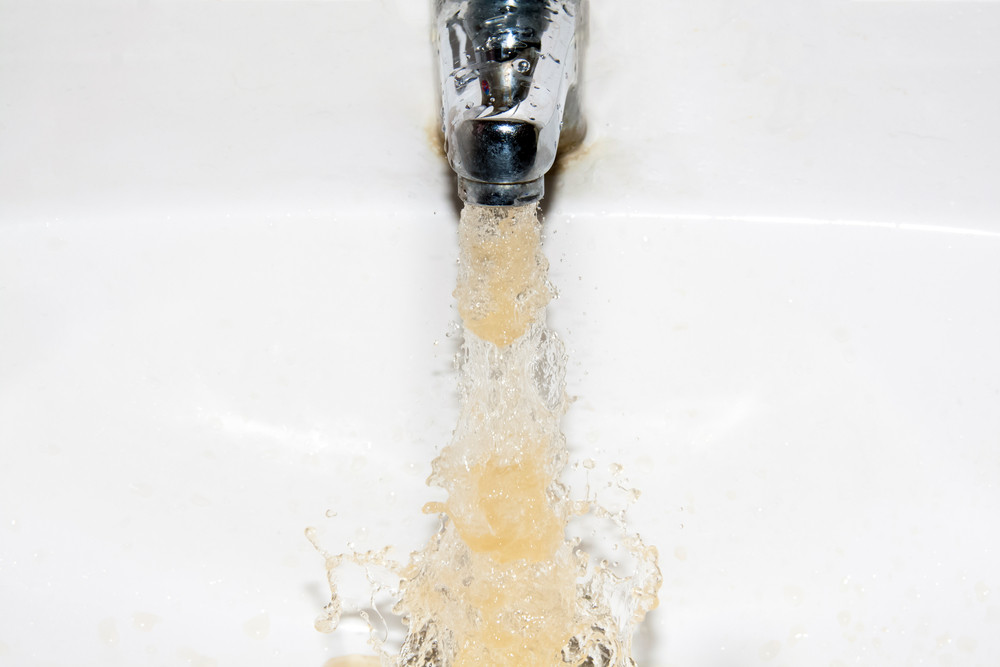
The vibrations caused by jackhammering, drilling, and even the simple act of cutting into a pipe can vibrate through the entire building’s plumbing skeleton. This “scours” the interior of the aging pipes, sending a pulse of sediment downstream. In our research, we have found that these pulses are often concentrated at the kitchen tap, which is typically the most frequently used outlet after a renovation. The result is “brown water” that isn’t just an aesthetic nuisance—it is a delivery system for any heavy metal that was previously sequestered in the pipe scale.
The Galvanic Ticking Time Bomb: Dissimilar Metals
A common mistake in Brooklyn renovations occurs when “new” meets “old.” Many contractors will replace the accessible plumbing in a bathroom or kitchen with modern copper or PEX tubing but leave the old galvanized steel or lead service lines in the walls or under the sidewalk. When copper is directly connected to a different metal like steel, it creates a “galvanic cell.”
In this electrochemical reaction, the less “noble” metal (the old steel) begins to corrode at an accelerated rate to “protect” the copper. This leads to pinhole leaks and, more critically, a significant increase in dissolved iron and zinc in the water. For homeowners, the signs are subtle at first: a slight metallic taste or a drop in water pressure. By the time the tap “fails” a laboratory test, the internal corrosion is often so severe that it requires a second, far more expensive repair. As we discuss on our blog, this “patchwork” plumbing is one of the leading causes of localized water quality degradation in 2026.
Stagnation and the Biofilm Bloom
Renovations often involve long periods of water stagnation. While a kitchen is being remodeled, the water in those specific branch lines may not move for weeks or even months. Without the constant flow of chlorinated municipal water, the “biofilm”—a thin layer of bacteria and organic matter—inside the pipes begins to thrive and thicken.
When the new fixtures are finally turned on, this thickened biofilm can “slough off” into the water. This leads to a spike in heterotrophic plate counts (HPC), which can cause gastrointestinal distress and skin irritation. For residents of older Brooklyn buildings, this biological failure is often a surprise, as they assume “new” pipes mean “clean” water. In our investigations, we emphasize that the commissioning of a new plumbing system requires aggressive flushing to clear out the microbial growth that occurred during the construction hiatus.
The Invisible Threat: Lead Pulses from Disturbed Service Lines
Perhaps the most significant risk associated with Brooklyn renovations is the disturbance of lead service lines. Even if a brownstone has been fully gutted, the line connecting the house to the street main is often original lead (if built before 1961). The physical jarring of the service line during nearby sidewalk work or internal plumbing swaps can release “lead fines”—microscopic particles of pure lead.
These particles do not dissolve; they remain as solids in the water, meaning a single glass can contain a massive, acute dose of the metal. Because these pulses are sporadic, a standard building-wide test might miss them entirely. This is why we advocate for unit-specific research into the material composition of your “last mile” of water delivery before, during, and after any major renovation project.
Health Impacts and the Need for Post-Construction Audits
The health impacts of these renovation-triggered failures range from the acute to the chronic. While high iron or sediment might cause immediate skin irritation or a “stomach bug,” the long-term ingestion of lead or copper from galvanic corrosion can lead to neurological issues and kidney damage. In 2026, the burden of proof has shifted to the homeowner; you can no longer assume that a “passed” city inspection from three years ago applies to your post-renovation reality.
Brooklyn residents should treat a water quality audit as the final, non-negotiable step of any home improvement project. A comprehensive test should look for:
- Total Suspended Solids (TSS): To measure the sediment load from mechanical scouring.
- Lead and Copper: To identify leaching from dissimilar metal connections or disturbed service lines.
- Chlorine Residual: To ensure that the building’s disinfection is reaching the new taps and suppressing biofilm growth.
Conclusion: Closing the Gap Between Design and Safety
A Brooklyn renovation should be a celebration of your home’s history and its future. However, the beauty of a new marble backsplash is hollow if the water flowing in front of it is contaminated by the very process that installed it. By understanding that your plumbing is a delicate, interconnected system, you can take the necessary steps to prevent “hidden” failures.
The most effective next step for any Brooklyn homeowner currently in the middle of a renovation—or planning one for later this year—is to secure a baseline and a post-work water audit. If you have recently finished a project and noticed a change in your water’s taste, color, or pressure, the best path forward is to contact a specialist today. Whether you are looking for investigations into your building’s pipe materials or need a tailored filtration solution to bridge the gap during construction, getting the data is the only way to ensure your renovation is as healthy as it is beautiful.